
Dish Costing in HoReCa: How to Stop Losing 15% Profit
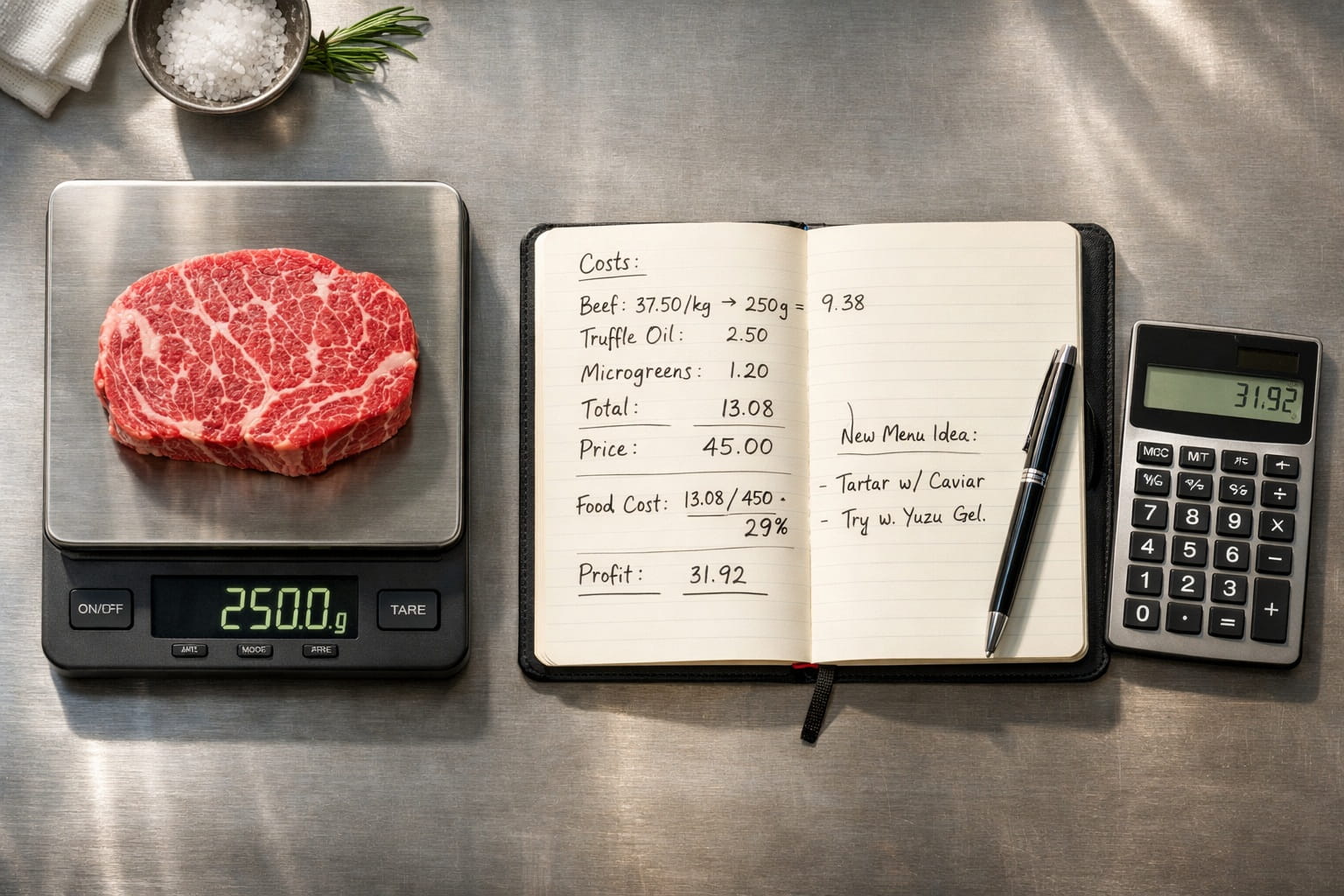
Dish costing in catering is the systematic calculation of the cost price of each menu item based on precise ingredient specifications (gross/net), waste percentages during processing, and current purchase prices. This process ensures food cost control, target margins, and P&L transparency. Accurate costing helps businesses in Ukraine avoid cash gaps and optimize operational expenses through the integration of technical cards into modern POS systems.
Understanding the mathematics of the kitchen is what distinguishes a profitable business from an amateur project. Over 20 years of observing the evolution of the Ukrainian HoReCa market, data confirms that most financial losses in restaurants and hotels arise not from low revenue, but from a lack of control over every gram of product and every minute of equipment operation.
Practice shows that establishments ignoring regular cost recalculations lose between 5% and 12% of net profit monthly. This article breaks down the mechanics of costing according to 2026 standards, where data and analytics replace intuitive management.
The Technical Card as a Financial Stability Foundation
A technical card (TC) is not just a list of ingredients for the chef; it is the primary tool for financial monitoring. In a professional environment, it is standard to separate TCs into calculation cards (for accounting and inventory) and operational instructions (for kitchen staff).
Lived reality confirms that an error in salt or spice weight by just 2 grams in a dish sold 1,000 times a month creates an unexplained shortage during inventory. However, inaccuracies in “gross-to-net” calculations have far more serious consequences.
Results of own observations on the Ukrainian market
Using outdated reference tables leads to a deviation of real food cost from theoretical food cost by 4–6%.
Lack of yield tests for seasonal vegetables (e.g., young vs. old potatoes) changes the waste percentage from 15% to 40%.
Ignoring the weight of marinades in semi-finished products artificially lowers the cost of meat items.
Every dish must undergo at least three stages of control yield testing by different kitchen shifts. Only the average of these tests can be considered the benchmark for the accounting system.
The Impact of Equipment on Food Cost: Facts and Figures
The choice of thermal equipment directly correlates with dish profitability. Professional kitchen design in 2026 is based on the calculation of Total Cost of Ownership (TCO) and the percentage of finished product yield. Comparative test results for cooking beef tenderloin using different methods demonstrate a significant difference in profitability:
Griddle/Flat Top (classic method): weight loss is 28–35%. Unstable fiber structure, high risk of overcooking.
Modern Combi-Oven with humidity control: weight loss is 18–22%.
Sous-vide technology (low-temperature cooking): weight loss is only 8–12%.
Mathematical analysis shows that when purchasing beef at average Ukrainian market prices, saving 15% in weight per kilogram allows the investment in a professional combi-oven to pay for itself within 10–14 months of intensive operation. This is the “hidden” costing often overlooked during initial investment.
Non-Obvious Factors: Water Hardness and Energy Efficiency
n many regions of Ukraine, particularly in the Odesa, Dnipro, and Poltava regions, water hardness significantly impacts operational costs. This technical aspect directly correlates with the cost price of every portion.
The impact of poor water treatment on business economics:
Increased energy costs: Scale on heating elements just 1 mm thick increases electricity consumption by 10–12%.
Extended cooking cycles: Increased time for water to boil or for the chamber to heat leads to an additional product shrinkage of 2–3% beyond the norm.
Service expenses: Depreciation charges for repairing equipment operating on hard water are 2.5 times higher than the cost of scheduled filter replacements.
A high-quality filtration system is not a luxury; it is a way to keep costing within normal limits. Without it, the real TCO of the equipment becomes unmanageable.
Ergonomics and Labor Cost Economics
Dish costing in catering is inseparable from Labor Cost. Every movement of a chef has a price. If the kitchen’s heat map is poorly designed, staff spend up to 30% of their working time on unnecessary movements. Productivity cycle comparison with different layouts:
Linear layout with remote cold storage: prep time for a complex salad is 12 minutes.
Ergonomic layout (island principle): prep time for the same salad is 7 minutes.
Increasing productivity by 40% allows an establishment to handle a higher guest flow without expanding the staff. Given the shortage of qualified personnel in Ukraine, optimizing work processes is a critical factor for business survival.
Sourcing Strategy: Focus on "Price per Yield"
A common mistake is purchasing raw materials based on the lowest “entry ticket” price. An expert approach requires analyzing the cost of the usable yield.
Comparison of sourcing strategies:
Option 1: Purchasing uncleaned vegetables:
Low entry price per 1 kg.
High labor costs for prep cooks.
Cleaning losses up to 45% during the off-season.
Costs for disposing of large volumes of waste.
Option 2: Purchasing Ready-to-cook (RTC) vacuum-packed vegetables:
Price per 1 kg is 60–80% higher.
Zero weight loss during shift prep.
Minimal Labor Cost (the chef starts cooking immediately).
Kitchen space savings (no need for a primary vegetable processing zone).
Analytical data confirms that for urban restaurants, the RTC format is often more profitable, as it allows for the reduction of production areas in favor of guest seating.
Margin Analysis and Menu Engineering
Effective dish costing enables deep Menu Engineering analysis using the BCG matrix. This allows for the categorization of the menu into four groups:
Stars: High popularity + High margin.
Plowhorses: High popularity + Low margin.
Puzzles: Low popularity + High margin.
Dogs: Low popularity + Low margin.
Without accurate costing, it is impossible to identify the “Dogs” that quietly drain working capital. Removing these items or re-engineering them (changing ingredients to lower costs) leads to an immediate P&L improvement.
Dynamic Food Cost and Accounting Automation
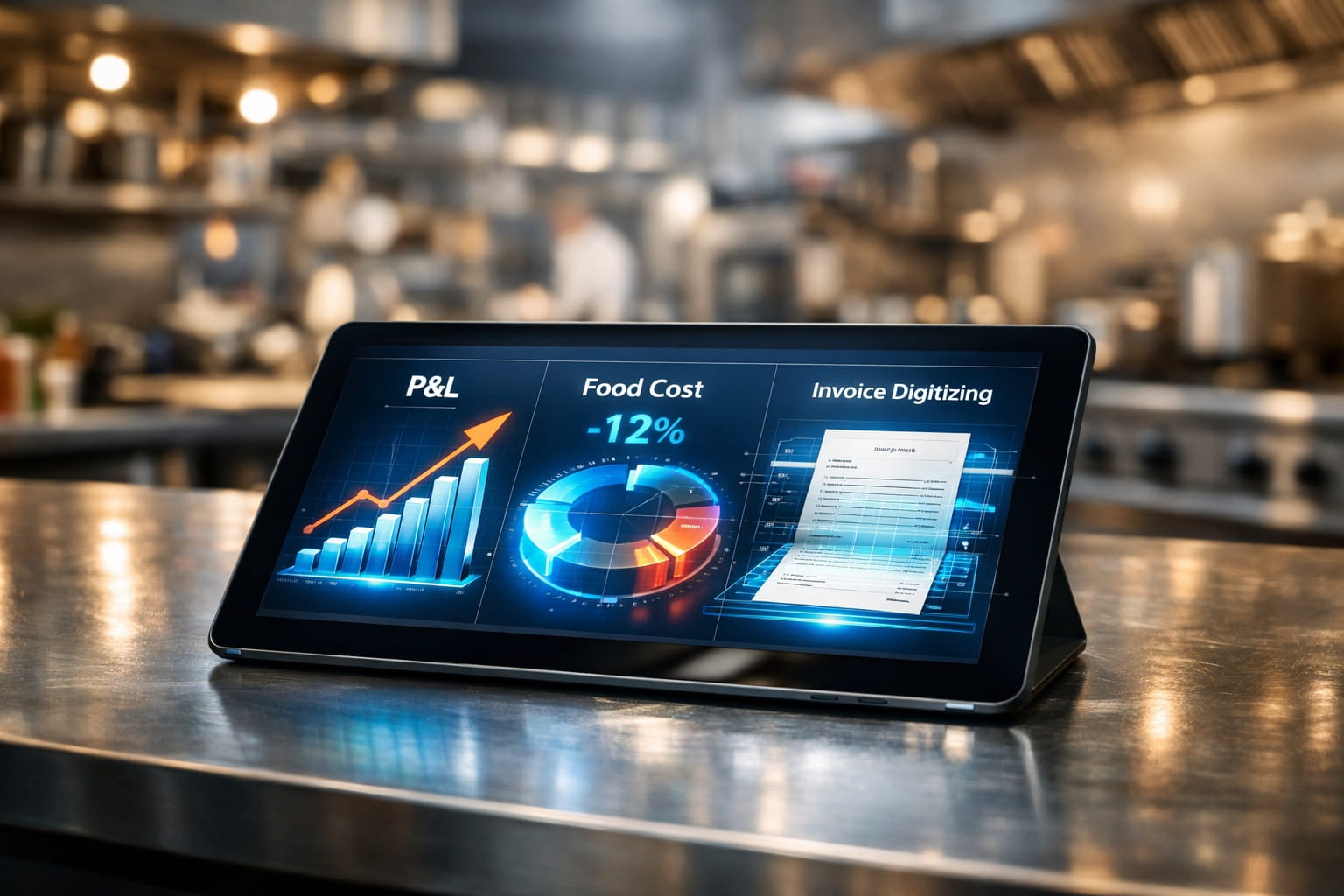
In 2026, costing cannot be static. Prices for energy and products in Ukraine change dynamically. Using cloud-based POS systems (like Poster, Syrve, etc.) allows for automated deductions using FIFO or weighted average price methods. It is crucial to track the variance between theoretical and actual food cost:
Theoretical Food Cost: The predicted indicator according to the TC.
Actual Food Cost: The real indicator based on inventory results.
An acceptable deviation in professionally managed establishments should not exceed 1.5–2%. If the figure is higher, the problem lies in technology violations, theft, or incorrectly entered supplier invoices.
Delivery as a Separate Calculation Process
The Delivery segment requires a separate costing model. The simple math of “dine-in price + box cost” fails to account for hidden expenses. What must be included in the delivery calculation:
Cost of specific packaging (TCO of packaging considering condensation resistance).
Aggregator commissions (Glovo, Bolt Food), which in Ukraine range from 30–35%.
Depreciation of a private courier fleet or logistics expenses.
Waste risks due to loss of presentation during transport.
Often, items with high margins in the dining room become loss-making in delivery specifically because of incorrect primary costing of “Last Mile” logistics.
Implementation Algorithm for an Effective Costing System
To achieve stable results, it is recommended to follow a strict sequence of actions:
Full TC Audit: Verifying the compliance of real dish yields with the accounting system records.
Inventory Setup: Controlling units of measure and conversion coefficients.
Weekly Inventories: For critical item groups (meat, alcohol, seafood).
Variance Analysis: Identifying and eliminating causes of discrepancies between theory and practice.
Staff Training: Establishing accountability for non-compliance with portion standards.
This is not a one-time event, but a cyclical process that must become part of the establishment’s operational culture.
The Future of Costing: AI and Predictive Analytics
2026 standards include the use of AI agents for procurement forecasting. Systems analyze demand, considering historical data and external factors (such as weather in Kyiv or Lviv), and automatically adjust order volumes. This minimizes Waste Management losses, which automatically lowers real food cost by 2–3%.
Dish costing in catering is not about filling out tables; it is about a deep understanding of the physics of kitchen processes and strict control over numbers. Owners and investors who prioritize mathematical precision over intuition gain a stable business with predictable profits. The modern HoReCa market in Ukraine does not forgive calculation errors but rewards systemic professionalism.
 Author: Ruslan, Independent HoReCa Analyst, Expert Technologist at eeat.com.ua