4 Technical Pitfalls in EU Scaling: How Losing $10,000 in Margin Becomes Reality for HoReCa
Strategic scaling and international expansion in HoReCa rely on three pillars: digital standardization of technological processes, optimization of equipment TCO (Total Cost of Ownership), and HACCP adaptation to local regulations. Successful market entry requires reducing OPEX by at least 12–15% through high-performance cooking cycles and energy-efficient thermal equipment, ensuring a stable EBITDA margin of 20–25%.
The Economic Model of Expansion: From CAPEX to a Viable P&L
Linear growth without a systemic overhaul of kitchen technology inevitably multiplies operational chaos. Analysis of restaurant chain scaling confirms that the lack of a “Technological DNA”—a unified set of requirements for equipment and processes—causes a loss of up to 4% in net profit due to logistics and product waste by the time the third location is launched.
Success in entering the markets of Poland, Germany, or the Czech Republic depends on the ability to deliver a product of identical quality within a fixed time (e.g., 7 minutes) without employing expensive, high-skilled personnel at every location. This is achieved through rigid unification of kitchen modules, where each zone is designed as an autonomous production unit.
Total Cost of Ownership (TCO) as the Foundation of Equipment Selection
When entering international markets, the purchase price (CAPEX) is only a fraction of the financial burden. A professional approach requires calculating the TCO (Total Cost of Ownership), which accounts for maintenance, energy consumption, and the cost of downtime.
A comparison of real performance metrics for thermal equipment in chain projects reveals the following:
Budget Segments: A lower purchase price is offset by a lack of automation and high resource consumption. The absence of automatic cleaning systems and high water consumption increase OPEX by $150+ monthly.
High-Tech Solutions: A higher initial investment pays off within 14–18 months through built-in filtration, precise steam control, and a 3% reduction in Food Cost by minimizing product weight loss (shrinkage).
Given European electricity tariffs, transitioning to induction hobs and energy-efficient combi-ovens is an economic necessity. Utilizing equipment with a low energy efficiency class in the EU makes the business model unprofitable as early as the first quarter of operation.
Regional Factors and Engineering System Durability
Technical audits of facilities in different regions reveal critical variations in operating conditions. One of the most destructive factors for a professional kitchen is the chemical composition of the water.
High Water Hardness Regions: Excessive mineralization leads to the failure of boiler heating elements within 6 months unless industrial reverse osmosis systems are installed.
Voltage Stability: In EU countries, frequency and peak load requirements are strictly regulated, necessitating the adaptation of electrical wiring diagrams at the procurement stage.
Service Support: The absence of authorized service within a 100 km radius of a location is a direct threat to EBITDA. Every day of downtime for critical equipment (e.g., a combi-oven) in a chain establishment costs between $300 and $1,500 in lost revenue.
Ergonomics and Cycle Productivity Engineering
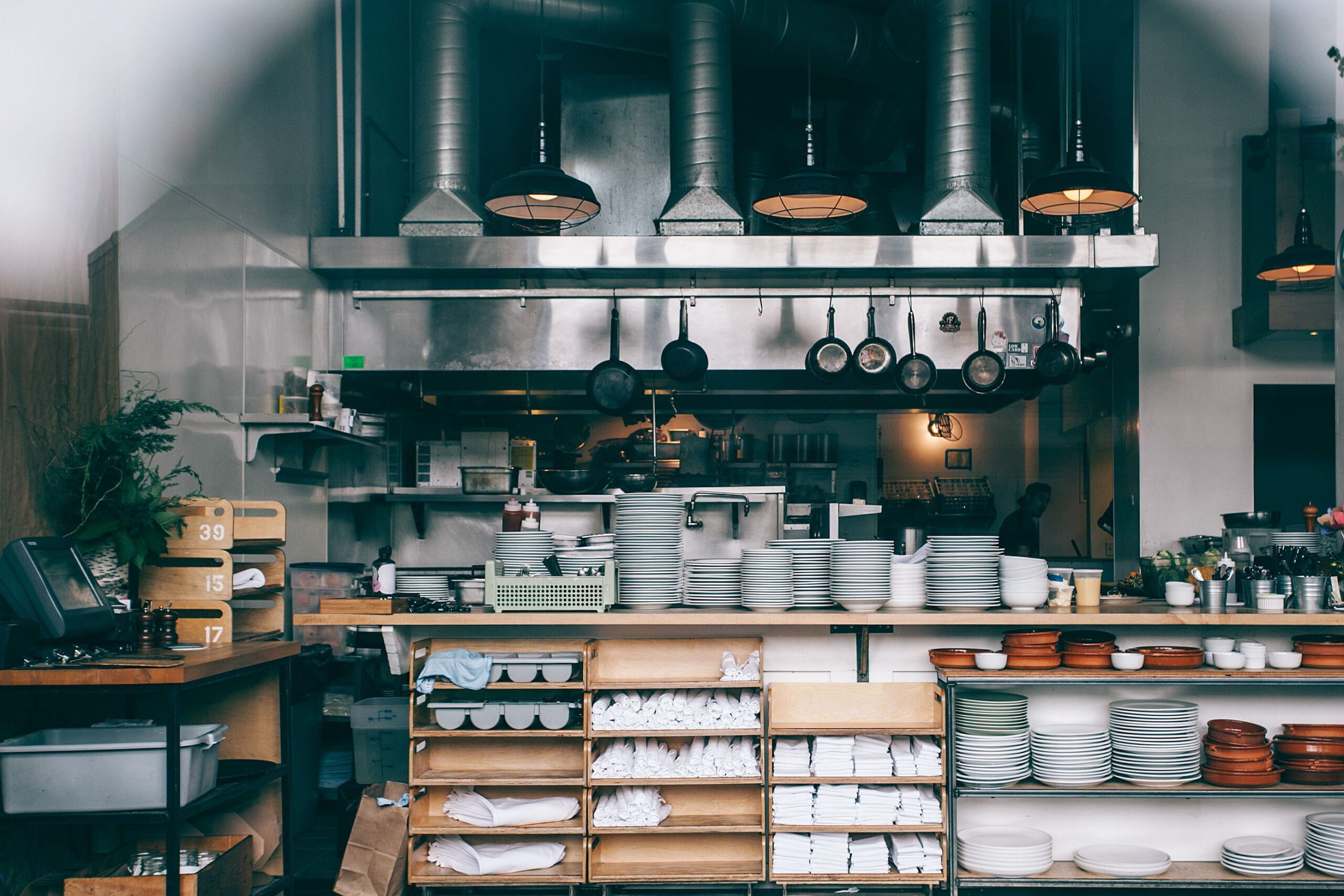
Professional kitchen ergonomics is not about comfort; it is a tool for optimizing labor costs. Utilizing the “Heat Map” method and “Spaghetti Diagrams” allows for shortening the chef’s path from the storage area to the stove from 10–12 meters to 2–3 meters. Results of implementing 5S principles and modular planning in chain projects:
Increase in speed of service: 15–20%.
Reduction in staff turnover: up to 25% due to decreased physical strain.
Decrease in order errors due to the logical arrangement of inventory.
International scaling requires the creation of a “Golden Planning Standard.” This allows for training line staff in Warsaw or Kyiv using identical checklists, guaranteeing product consistency.
Digitization of HACCP Standards and Operational Control
In 2026, compliance with HACCP standards has fully transitioned to a digital format. Paper logs are being replaced by real-time monitoring systems. Integrating IoT sensors into refrigeration and thermal equipment provides:
Automatic Temperature Logs: Full protection against fines during inspections by EU regulatory bodies.
Waste Minimization: Instant notifications of temperature deviations prevent the spoilage of stock.
Energy Monitoring: Analysis of the consumption of each piece of equipment to identify hidden malfunctions.
Digital control is critical for investors, as it ensures total transparency of operational processes at remote locations without the need for a constant physical presence.
Comparative Assessment of Scaling Strategies
Market analysis highlights two primary approaches to expansion, resulting in vastly different financial outcomes:
Decentralized Procurement Strategy (High Risk):
Purchasing different equipment brands for each location.
Lack of a unified service maintenance system.
Local adaptation of technical cards without centralized control.
Result: Unpredictable Food Cost, high spare parts inventory costs, brand dilution.
Technological Unification Strategy (Effective):
Unified global contract with a manufacturer (volume-based CAPEX reduction).
Implementation of a single ERP system integrated with kitchen equipment.
Centralized R&D center for developing dishes and semi-finished products.
Result: Stable 20%+ margin, rapid rollout of new points, asset liquidity.
Kitchen Economics: Hidden Profit Reserves
True Food Cost includes more than just the price of ingredients; it encompasses energy costs and staff time spent on prep. The practice of implementing deep fryers with automatic oil filtration systems demonstrates the following efficiency:
Reduction in frying fat expenditure: 40–50%.
Guaranteed dish quality (low acrylamide levels) meeting EU safety standards.
Reclaiming 15–20 minutes of labor time per shift per chef.
Over a year of operation at a single location, such optimization saves an amount equivalent to the cost of a mid-range induction module. Across a chain, these figures become a key resource for reinvesting in growth.
De-skilling Processes as a Response to Labor Shortages
The shortage of qualified chefs is a global challenge. High hourly labor rates in the EU force businesses to move toward the “de-skilling” of complex processes. This is achieved through intelligent equipment interfaces (icon-based recipe programming). The use of automated cooking cycles allows for:
Hiring staff without specialized culinary education.
Reducing the adaptation period for new employees to 48 hours.
Eliminating human error from recipe compliance.
Conclusion for Strategic Planning
Scaling in HoReCa is the transformation of a gastronomic concept into a resilient production system. In 2026, the winning projects are not those focused on unique decor, but those where the technological cycle is the shortest and operational expenses are the most predictable.
Before beginning an expansion, it is necessary to conduct a full technical audit, evaluate the energy efficiency of current solutions, and adapt the engineering part of the project to the requirements of the target market. Investing in equipment unification and digital control is the only way to protect business margins when entering the international arena.
Author: Ruslan, Independent HoReCa Analyst, Expert Technologist at eeat.com.ua


 Author: Ruslan, Independent HoReCa Analyst, Expert Technologist at eeat.com.ua