12% of profit “in the trash”: how to set up Food Cost in a restaurant and why your TTCs don’t work
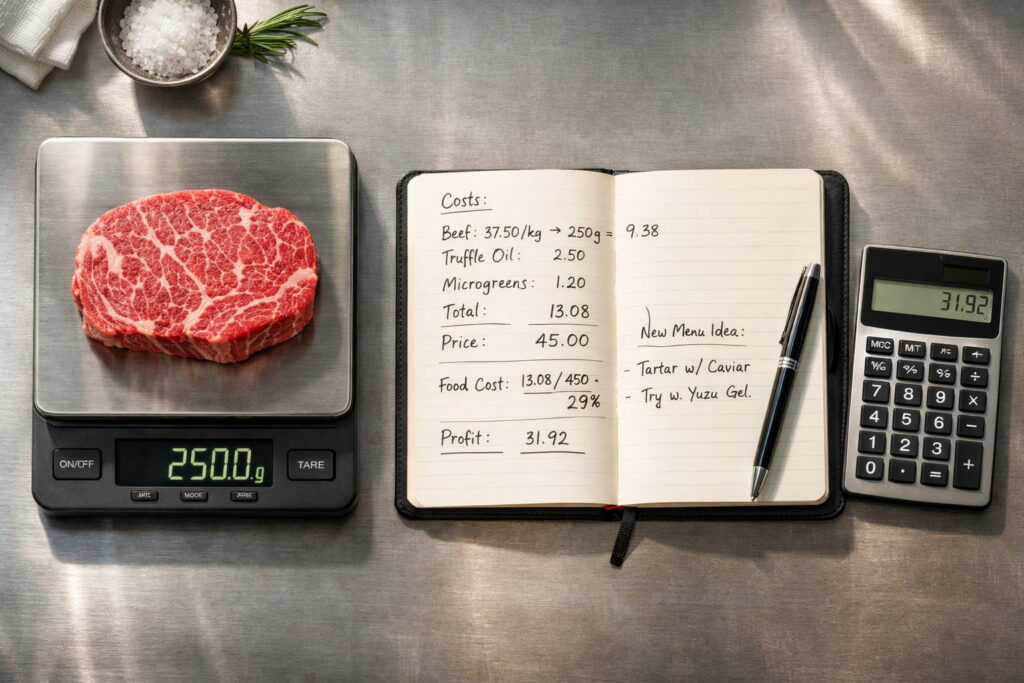
Food Cost is the percentage ratio of the cost of ingredients to the net selling price of the dish. To obtain an accurate indicator, it is necessary to take into account the current purchase prices, the real percentage of waste (f-cost) and the results of the monthly inventory. The optimal food cost for the Ukrainian market is 25–35%, depending on the format of the establishment and operational efficiency.
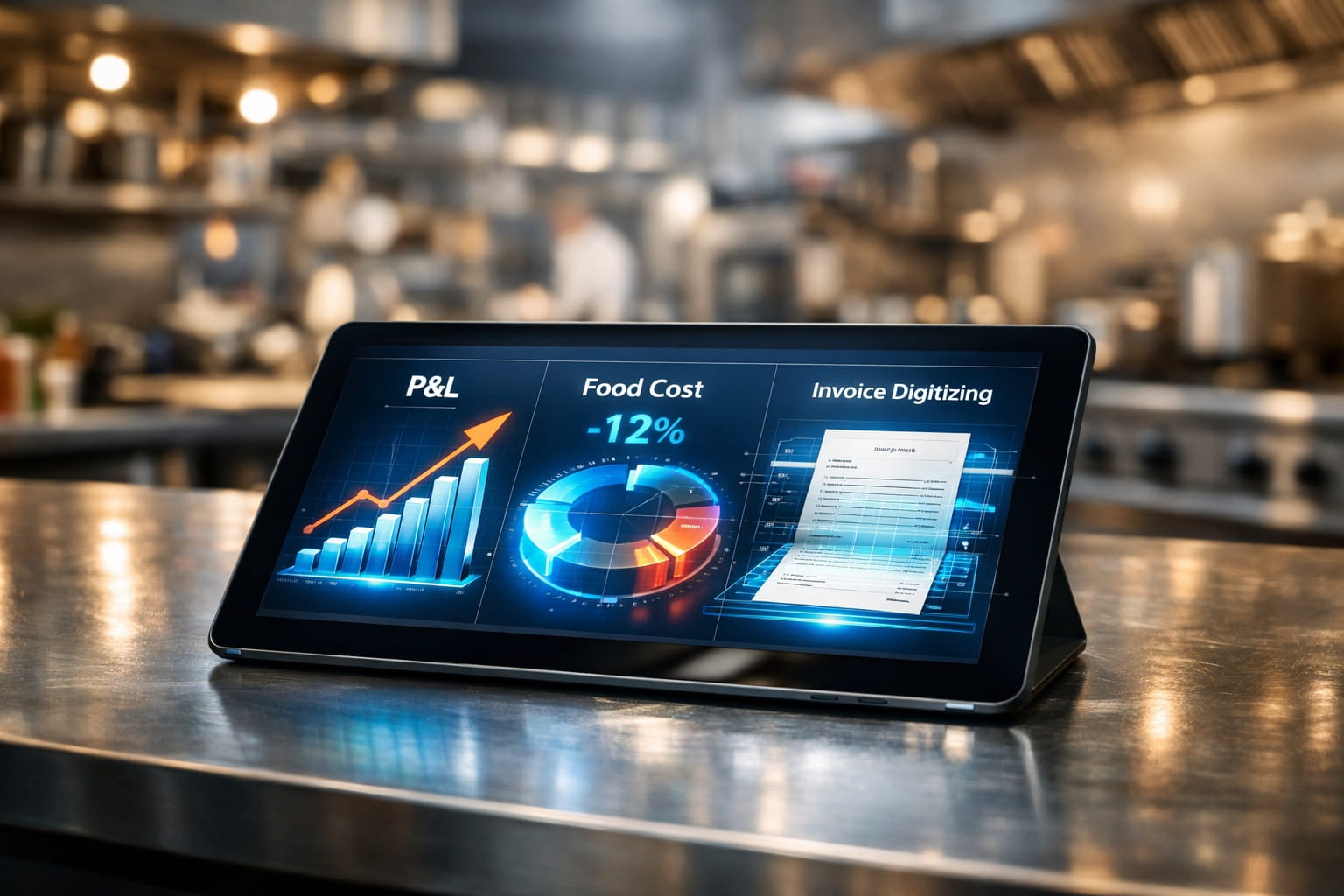
It happens that the numbers in the P&L reports are ideal, but the owners do not see money in the cash register. The problem is always the same: the detachment of theoretical calculations from “reality”. In this article, I will analyze how to turn the cost calculation from a boring table into a profit management tool.
Why Your "Theoretical" Food Cost is an Illusion
Most chefs create a process map (TCM) once upon opening. They weigh the carrots, calculate 15% waste, and relax. In practice, the actual food cost is usually 4–7% higher than the calculated one. Here are a few reasons why:
Inaccurate scales during receiving result in a 2–3% loss of margin every month.
Failure to track “comps” (complimentary items) distorts the P&L.
Seasonal humidity changes affecting vegetables in non-refrigerated storage increase waste by 5–8%.
How Equipment Choice "Cuts" Into Your Margin
As a consultant, I maintain that Food Cost begins not with procurement, but with the choice of an oven. The Total Cost of Ownership (TCO) of cheap equipment often outweighs any initial savings.
How ergonomics and smallwares affect cycle speed:
Placement of GN containers: If a chef has to take three extra steps to the refrigerator, cycle productivity drops by 15%.
Knife quality: Dull tools increase the waste percentage during meat fabrication by 3–4%.
Water hardness: In regions with hard water (e.g., Odesa or Dnipro), without proper filtration, Combi Oven heating elements become scaled within 3 months. This increases the time to reach operating temperature by 12%, directly impacting energy consumption and service speed.
A Step-by-Step Algorithm for Calculating Actual Cost
To ensure your P&L is not “just anything”, follow this sequence.
Step 1. Price Actualization via FIFO
Product prices in Ukraine currently fluctuate weekly. Use the FIFO (First In, First Out) method. Your accounting system must deduct ingredients based on the price of the batch that arrived first. Calculating by “average price” masks reality when the price of oil or salmon jumps by 20% overnight.
Step 2. Yield Management (Waste Control)
I recommend performing “yield tests” every two weeks. Vegetables in February have a different waste percentage than in September.
Meat: Measure weight loss during defrosting, trimming, and thermal processing.
Vegetables: Account for caliber. Small potatoes yield 10% more waste during peeling than large ones.
Step 3. Accounting for "Invisible" Costs
Salt, spices, and frying oil are the “black hole” of Food Cost. Instead of trying to count 2 grams of salt in a Technical Card, I suggest applying a fixed % of loss (usually 1–2% of turnover) to the dish group. This is more accurate than trying to weigh every pinch.
Dish Margin and Menu Engineering
Calculating Food Cost is not enough—you must learn to manage it. We use the Boston Matrix methodology (Stars, Plowhorses, Puzzles, Dogs).
Local Context: Ukrainian Realities 2025–2026
Energy Independence: Running on generators increases the cost of food storage. I have seen sites where diesel costs added 3–7% to the Food Cost of every dish.
Supply Chain Disruptions: Unstable deliveries force chefs to hold high inventory levels (“dead stock”). This represents “frozen” cash and a higher risk of expiration.
The Shift to Local: We are currently seeing a mass transition from Italian cheeses to Ukrainian craft alternatives. Quality is often comparable, while the logistics component of the Food Cost decreases by 15–20%.
Checklist for Auditing Your Executive Chef
If you are the owner, ask your chef these three questions tomorrow morning:
What is the variance between our theoretical and actual Food Cost for the past month? (If the answer is “I don’t know” or “they are the same”—you have an accounting problem).
What percentage of waste/spoilage is factored into our P&L? (The norm is up to 2–3%).
When was the last time we performed a yield test on core ingredients to measure weight loss?
Proper Food Cost is not about math; it is about process discipline. Your net profit depends on how you designed your kitchen, whether you have the right Combi Oven, and whether you clean your water filters on time. Don’t look for the “ideal” food cost—look for the reasons behind the discrepancies between paper and reality.
 Author: Ruslan, Independent HoReCa Analyst, Expert Technologist at eeat.com.ua